
Clinical trial on twins: are prebiotics good for cognition?
A clinical trial conducted on pairs of twins aged over 60 assessed the impact of prebiotic fibre supplementation on cognitive function. And the results could help confirm the link between microbiota and the brain...


Cognition and prebiotics: new scientific leads
In this recent study (1), published in 2024 in the journal Nature Communications, 36 pairs of twins aged 60 or over took part in a randomised, double-blind, placebo-controlled trial.
Studying pairs of twins is particularly interesting: comparing the effect of a nutrient on two individuals who are genetically very close, sometimes identical, makes it possible to limit biological variations and obtain more detailed observations.
For 12 weeks, each pair of twins was divided into two groups:
- one twin was given 7.5 g/day of a prebiotic mixture consisting of approximately 3.4 g of inulin and 3.5 g of fructo-oligosaccharides (FOS)
- the other twin received a placebo of 7.5 g of maltodextrin (a carbohydrate blend)
The participants were assessed on standardised cognitive tests (memory, processing speed, attention), microbiotic and metabolic parameters and their general well-being.
The result: the twins who received the prebiotic performed better on cognitive tests, particularly those relating to episodic memory and information processing speed.
This clinical trial therefore suggests that certain prebiotics may have a favourable influence on brain function in the elderly, possibly via modulation of the intestinal microbiota and its metabolites.
Prebiotics: how do they work, and where can I find them?
Prebiotics are fermentable dietary fibres that our bodies do not digest.
They serve mainly as food for good intestinal bacteria (probiotics), in particular bifidobacteria and lactobacilli.
The most widely studied prebiotic fibres include:
- inulin, known for its progressive fermentation and its role in maintaining a diverse microbiota (2)
- FOS (fructo-oligosaccharides), capable of selectively feeding certain beneficial bacteria in the microbiota, in particular bifidobacteria (3)
- acacia gum (or gum arabic), a soluble fibre renowned for its excellent digestive tolerance (4)
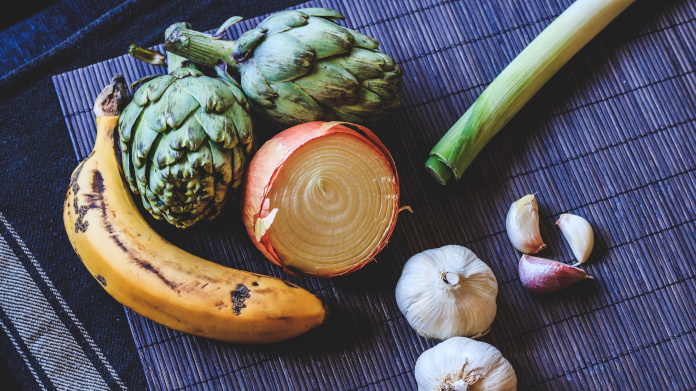
Food is the primary source of prebiotic fibre: it is found in chicory root, garlic, onions and leeks, artichokes and Jerusalem artichokes, bananas, legumes, etc.
But when dietary intake is insufficient, it is also possible to turn to targeted food supplements.
 Discover Fructo-Oligosaccharides, a prebiotic fibre supplement derived from beetroot, to be sprinkled daily in drinks or food.
Discover Organic Acacia, an organic acacia food supplement with a gentle, long-lasting prebiotic profile.
Prebiotics, probiotics and the gut-brain axis
The results of the clinical trial suggest that prebiotics could influence certain aspects of cognition in senior citizens, via their action on the intestinal microbiota.
By fermenting, prebiotics encourage the growth of probiotics and stimulate the production of beneficial metabolites: SCFAs (short-chain fatty acids).
While probiotics are known to help balance the intestinal microbiota, they are also widely studied for their potential impact on the gut-brain axis (5-7).
Bifidobacterium lactis, Lactobacillus plantarum, Lactobacillus rhamnosus, Bifidobacterium breve and Akkermansia muciniphilaare just some of the strains currently attracting research interest (8-10).
Discover Probio Forte, a combination of 5 complementary strains to support the microbiota, with 8 billion microorganisms per capsule.
Discover Full Spectrum Probiotic, a unique broad-spectrum microbiotic food supplement, distinguished by its wide variety of strains (20 quality strains).
Protected by their spore envelope, spore probiotics are particularly resistant to gastric acidity.
They are, therefore, an interesting alternative for supporting the balance of the intestinal microbiota and harnessing the potential benefits for the gut-brain axis.
Discover SporesBiotics Formula, an exclusive synergy of 3 spore-forming strains designed to maximise colonisation of the intestine.
Finally, some food supplements combine prebiotics and probiotics for enhanced synergistic action.
Discover Lactobacillus Rhamnosus GG, a probiotic supplement containing inulin to stimulate the growth and viability of lactobacilli.
Which natural ingredients support cognition?
Certain nutrients and plant extracts are also being studied for their potential role in memory, attention or neuroprotection.
Ginkgo biloba: cerebral circulation and mental functions
An essential plant in traditional Chinese medicine, Ginkgo biloba contains antioxidant flavonoids renowned for their action on the circulatory system.
Ginkgo biloba is known to contribute to mental and cognitive activity (11). Certain standardised extracts of Ginkgo biloba may be associated with:
- the maintenance of certain cognitive functions with age
- improved cerebral blood circulation
- protection against oxidative stress
Discover Ginkgo Biloba, a standardised extract rich in natural active ingredients, which helps maintain good cognitive function and memory.
Alpha-GPC & uridine: the neuronal membrane duo
Alpha-GPC is an organic compound found naturally in the brain.
A precursor of choline, it is involved in the synthesis of acetylcholine, a neurotransmitter involved in certain cognitive processes such as memory, attention and alertness.
Uridine, for its part, is involved in several major biological mechanisms: the synthesis of cell membranes, neuronal signalling and some processes linked to the formation of synapses.
Several studies suggest that uridine may promote certain cognitive functions, in particular memory and brain plasticity (12-13).
Discover NeuroNutrition Formula, a complete formula combining 7 substances studied to protect the brain from the effects of ageing.
Bacopa, caffeine and L-theanine: memory and mental clarity
A major plant in traditional Indian medicine, Bacopa monnieri is widely studied for its potential effects on the cerebral system.
Some studies are looking at its possible association with cognitive processes such as memory and attention, although these effects cannot be generalised to the population as a whole.
Bacopa also contains antioxidant compounds naturally present in the plant, which are involved in biological mechanisms linked to oxidative stress, a phenomenon studied in the context of cellular ageing.
L-theanine, an amino acid found in green tea, is being studied for its interaction with the nervous system, with a particular interest in regulating stress and mental tension.
Caffeine, well known for stimulating alertness, forms with L-theanine one of the most studied combinations for supporting alertness, concentration and stable mental clarity (14-15).
Discover Smart Pills, a nootropic formula rich in bacopa and ginkgo, enhanced with L-Theanine, taurine and anhydrous caffeine.
SUPERSMART ADVICE
References
- Ni Lochlainn, M., Bowyer, R.C.E., Moll, J.M. et al. Effect of gut microbiome modulation on muscle function and cognition: the PROMOTe randomised controlled trial. Nat Commun 15, 1859 (2024). https://doi.org/10.1038/s41467-024-46116-y
- Hughes RL, Alvarado DA, Swanson KS, Holscher HD. The Prebiotic Potential of Inulin-Type Fructans: A Systematic Review. Adv Nutr. 2022 Mar;13(2):492-529. doi: 10.1093/advances/nmab119. Epub 2023 Feb 10. PMID: 34555168; PMCID: PMC8970830.
- Wang Y, Li N, Yang JJ, Zhao DM, Chen B, Zhang GQ, Chen S, Cao RF, Yu H, Zhao CY, Zhao L, Ge YS, Liu Y, Zhang LH, Hu W, Zhang L, Gai ZT. Probiotics and fructo-oligosaccharide intervention modulate the microbiota-gut brain axis to improve autism spectrum reducing also the hyper-serotonergic state and the dopamine metabolism disorder. Pharmacol Res. 2020 Jul;157:104784. doi: 10.1016/j.phrs.2020.104784. Epub 2020 Apr 17. PMID: 32305492.
- Barkeer S, Pothuraju R, Malakar P, Pimentel TC, Siddiqui JA, Nair SA. Gum acacia dietary fiber: Significance in immunomodulation, inflammatory diseases, and cancer. Phytother Res. 2024 Mar;38(3):1509-1521. doi: 10.1002/ptr.8125. Epub 2024 Jan 25. PMID: 38272848.
- Dinan TG, Cryan JF. The Microbiome-Gut-Brain Axis in Health and Disease. Gastroenterol Clin North Am. 2017 Mar;46(1):77-89. doi: 10.1016/j.gtc.2016.09.007. Epub 2017 Jan 4. PMID: 28164854.
- Mörkl S, Butler MI, Holl A, Cryan JF, Dinan TG. Probiotics and the Microbiota-Gut-Brain Axis: Focus on Psychiatry. Curr Nutr Rep. 2020 Sep;9(3):171-182. doi: 10.1007/s13668-020-00313-5. Erratum in: Curr Nutr Rep. 2020 Sep;9(3):183. doi: 10.1007/s13668-020-00319-z. PMID: 32406013; PMCID: PMC7398953.
- Chudzik A, Orzyłowska A, Rola R, Stanisz GJ. Probiotics, Prebiotics and Postbiotics on Mitigation of Depression Symptoms: Modulation of the Brain-Gut-Microbiome Axis. Biomolecules. 2021 Jul 7;11(7):1000. doi: 10.3390/biom11071000. PMID: 34356624; PMCID: PMC8301955.
- Uusitupa HM, Rasinkangas P, Lehtinen MJ, Mäkelä SM, Airaksinen K, Anglenius H, Ouwehand AC, Maukonen J. Bifidobacterium animalis subsp. lactis 420 for Metabolic Health: Review of the Research. Nutrients. 2020 Mar 25;12(4):892. doi: 10.3390/nu12040892. PMID: 32218248; PMCID: PMC7230722.
- Zhou B, Jin G, Pang X, Mo Q, Bao J, Liu T, Wu J, Xie R, Liu X, Liu J, Yang H, Xu X, Wang B, Cao H. Lactobacillus rhamnosus GG colonization in early life regulates gut-brain axis and relieves anxiety-like behavior in adulthood. Pharmacol Res. 2022 Mar;177:106090. doi: 10.1016/j.phrs.2022.106090. Epub 2022 Jan 19. PMID: 35065201.
- Jian H, Liu Y, Wang X, Dong X, Zou X. Akkermansia muciniphila as a Next-Generation Probiotic in Modulating Human Metabolic Homeostasis and Disease Progression: A Role Mediated by Gut-Liver-Brain Axes? Int J Mol Sci. 2023 Feb 15;24(4):3900. doi: 10.3390/ijms24043900. PMID: 36835309; PMCID: PMC9959343.
- Diamond BJ, Bailey MR. Ginkgo biloba: indications, mechanisms, and safety. Psychiatr Clin North Am. 2013 Mar;36(1):73-83. doi: 10.1016/j.psc.2012.12.006. PMID: 23538078.
- Dobolyi A, Juhász G, Kovács Z, Kardos J. Uridine function in the central nervous system. Curr Top Med Chem. 2011;11(8):1058-67. doi: 10.2174/156802611795347618. PMID: 21401495.
- Holguin S, Martinez J, Chow C, Wurtman R. Dietary uridine enhances the improvement in learning and memory produced by administering DHA to gerbils. FASEB J. 2008 Nov;22(11):3938-46. doi: 10.1096/fj.08-112425. Epub 2008 Jul 7. PMID: 18606862; PMCID: PMC2574024.
- Anas Sohail A, Ortiz F, Varghese T, Fabara SP, Batth AS, Sandesara DP, Sabir A, Khurana M, Datta S, Patel UK. The Cognitive-Enhancing Outcomes of Caffeine and L-theanine: A Systematic Review. Cureus. 2021 Dec 30;13(12):e20828. doi: 10.7759/cureus.20828. PMID: 35111479; PMCID: PMC8794723.
- Owen GN, Parnell H, De Bruin EA, Rycroft JA. The combined effects of L-theanine and caffeine on cognitive performance and mood. Nutr Neurosci. 2008 Aug;11(4):193-8. doi: 10.1179/147683008X301513. PMID: 18681988.
Keywords





5 Days
Super fast delivery
Super fast delivery. Trying flexismart at the moment, Maybe a bit too soon to see results bit nice tolérance so far.
Maria Angeles Verdu
5 Days
Good service
Supersmart are an efficient company - the order arrived quickly. This is usual for them, though they have occasionally been let down by delivery firms - not a surprise and not their fault.
Barry Humphries
6 Days
Excellent product
Excellent product, quick delivery
FERENCNE Soros
8 Days
High quality, reliable service!
I have been ordering their products for years! They are excellent quality. And despite the international shipping, my order allways arrived pretty fast. The loyalty program is very fair, I get great prices on the products. Imagine: my specialists are asking me what have I been taking that my counts are so good!
Petra Hruskova
9 Days
I purchased Melatonin
I purchased Melatonin, very quick delivery to the UK and product is perfect. Very Happy
Dean Harriss
11 Days
Avis général
Well boxes are white but that puts a bit of serious color for my grey matter. Supersmart is quality products and made myself a pharmacy. Honestly should be remboursed by the health institutes selling pills
LEBORDAIS Thomas
12 Days
Arrives in just five days even to Japan…
Arrives in just five days even to Japan – that’s insanely fast! Amazing lineup of innovative products.
namio
15 Days
Quality and choice of supplements.
Quality and choice of supplements.
Maja
19 Days
perfect great
perfect great
igor janic
24 Days
Good products and speedy delivery
Good products and speedy delivery
Jim
28 Days
Very good
Very good, fast delivery
Paddy
28 Days
Excellent products
Excellent products. Excellent servce.
MIFSUD Joseph
28 Days
It was sent expediently
It was sent expediently, the tracking worked nicely!
Roger De Backer
30 Days
Everything okay
Quality products people can account on. Fast shipping.
Fred Laan
41 Days
Good products
Good products
Emmanuel
of experience
your money back
##montant## purchase