
Lactobacillus acidophilus: studied benefits and known sources
It's a proven fact: probiotics help to support the balance of the intestinal microbiota. But Lactobacillus acidophilus, the famous lactic acid bacteria, could also play other key roles in our health.

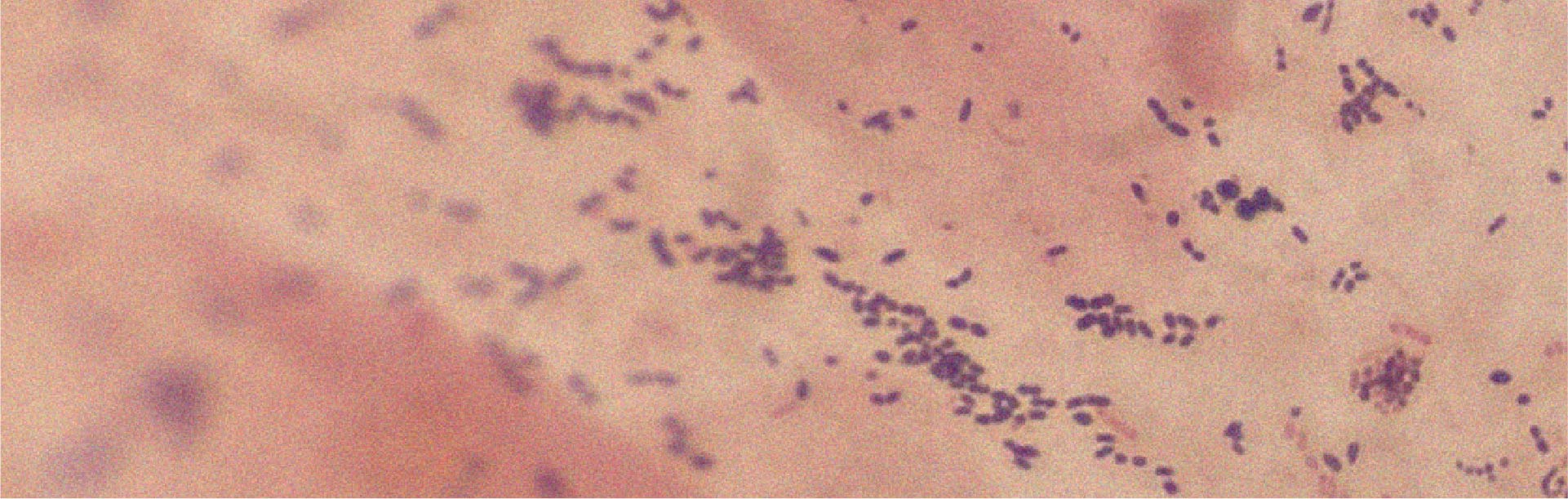
Lactobacillus acidophilus: what is it?
Lactobacillus acidophilus is a probiotic species naturally present in several human microbiota: those of the intestine, vagina and oral cavity. It is also one of the bacteria detected in breast milk (1).
Like other 'good bacteria', L. acidophilus is found in our intestinal microbiota, also known as the gut flora.
Made up of over 100 trillion living microorganisms – mainly bacteria, but also yeasts, viruses and a few fungi – this microbiota plays a vital role in the body.
When balanced, it helps with digestion and the overall functioning of the digestive tract.
As well as contributing to the functioning of the intestinal immune system, it is also widely studied for its potential effects on the regulation of metabolism and nervous balance (2-3).
Conversely, an imbalance in this ecosystem, or dysbiosis, can encourage the onset of various functional, digestive or inflammatory disorders (4).
The studied benefits of Lactobacillus acidophilus
Lactobacillus acidophilus is a strain that scientists have been studying for over 40 years.
Isolated for the first time in 1975 in the laboratories of the University of South Carolina, numerous studies are now focusing on its potential effects and interactions with the intestinal microbiota.
Helping to balance the intestinal microbiota
We now know that probiotics help to balance the intestinal microbiota.
Studies have shown that L. acidophilus adheres to the intestinal mucosa and modulates the local immune response, preventing colonisation of the gastric mucosa by pathogens by creating an unfavourable environment (5).
L. acidophilus could also prevent the duration and frequency of episodes of diarrhoea, whether due to antibiotic treatment or other factors such as irritable bowel syndrome (6-7).
A potential role in digestion
The results of a study conducted on children with lactose intolerance suggest that consumption of milk fermented with L. acidophilus may be associated with a reduction in symptoms such as bloating and abdominal pain (8).
Certain strains could therefore play a part in improving tolerance to dairy products in sensitive individuals.
Support for the immune system?
L. acidophilus could also have immunomodulatory properties: it could stimulate and positively regulate the immune system at the level of the intestinal microbiota.
According to several studies (in vitro and in vivo), this probiotic stimulates certain immune responses and produces antimicrobial compounds capable of limiting the growth of gastrointestinal pathogens such as Escherichia coli and Salmonella typhimurium (9-11).
A possible link with the relief of gastrointestinal infections
Finally, a number of studies suggest that Lactobacillus acidophilus may contribute to the relief of gastrointestinal disorders via different mechanisms (12-14):
- limiting the presence and activity of pathogenic bacteria through the production of antimicrobial substances, and preventing them from adhering to the intestinal wall
- protecting and strengthening the intestinal mucosa by forming a protective biofilm and stimulating the production of mucins, the molecules that form a physical barrier against invaders
- moderating certain inflammatory reactions, thereby reducing the intensity of symptoms linked to infections or an imbalance in the microbiota
What are the sources of Lactobacillus acidophilus?
Food, food supplements... Where can you find Lactobacillus acidophilus?
Food sources of Lactobacillus acidophilus
L. acidophilus is naturally present in various fermented foods:
- yoghurt with live cultures
- kefir
- some varieties of sauerkraut
- sourdough bread
- fermented meat
- traditional products such as kimchi, kombucha, miso, tempeh or lassi
It's not always easy to eat these foods. Targeted supplementation can help to supplement your intake.
Supplementing with Lactobacillus acidophilus: what's the point, and how do you choose?
Although fermented foods can contain several billion bacteria per portion, the quantity depends on how they are manufactured, their freshness and storage conditions.
With a dietary supplement, the number of bacteria ingested is standardised: expressed in CFU (Colony Forming Units), it ensures an adequate daily intake.
Another advantage of quality supplementation is the selection of specific strains, identified by a code, whose effects have been documented in clinical studies.
Not all strains of the same species have the same properties: some may have an effect on lactose tolerance, while others may have an effect on the immune response or the growth of pathogenic bacteria.
Finally, lactic acid bacteria are fragile and can lose their activity when exposed to heat, humidity or oxygen; in supplements, they are freeze-dried and then encapsulated, sometimes in gastro-resistant capsules that protect them from stomach acid.
To choose a good supplement:
- check the CFU count: a Lactobacillus acidophilus-based supplement has at least 10⁹ CFUs per serving (i.e. 1 billion) guaranteed at the expiry date, and ideally several billion
- choose a high-quality freeze-dried supplement, packaged in gastro-resistant capsules to ensure the bacteria survive until the expiry date
- choose strains that are clearly identified and documented by clinical studies
- opt for a combination with other probiotics (Bifidobacterium or other Lactobacillus strains)
In some supplements, you can find Lactobacillus acidophilus in synergy with other probiotic species, for enhanced action.
 Discover Probio Forte, a probiotic formula containing 5 species for the intestinal microbiota (Bifidobacterium lactis, Lactobacillus acidophilus, casei and plantarum and Lactococcus lactis).
Some studies suggest that certain probiotics may also help to reduce the pain and intensity of symptoms in people with irritable bowel syndrome, thereby improving their digestive comfort (15).
Discover Colon Friendly, a complete probiotic that combines the 4 strains Lactobacillus acidophilus, Bifidobacterium longum longum, Bifidobacterium longum infantis and Saccharomyces cerevisiae in a single gastro-resistant capsule.
The benefits of L. acidophilus are also thought to be supported by prebiotics such as inulin, a carbohydrate that serves as food for ‘good bacteria’ (16).
Discover H. Pylori Fight Advanced Formula, a probiotic food supplement rich in inulin that also contains 3 well-known probiotics (Lactobacillus acidophilus, Bifidobacterium bifidum and Streptococcus thermophilus), for a balanced intestinal microbiota.
Opting for a supplement rich in various probiotic strains and species will allow you to make the most of all their potential benefits.
Discover Full Spectrum Probiotic, a broad-spectrum multi-strain probiotic that brings together the 20 best strains, powerfully dosed at 36 billion CFU per day.
SUPERSMART ADVICE
References
- Łubiech K, Twarużek M. Lactobacillus Bacteria in Breast Milk. Nutrients. 2020 Dec 10 ; 12 (12) : 3783. doi: 10.3390/nu12123783. PMID: 33 321 792 ; PMCID : PMC7764098.
- Fan Y, Pedersen O. Gut microbiota in human metabolic health and disease. Nat Rev Microbiol. 2021 Jan;19(1):55-71. doi: 10.1038/s41579-020-0433-9. Epub 2020 Sep 4. PMID: 32887946.
- Schneider E, O'Riordan KJ, Clarke G, Cryan JF. Feeding gut microbes to nourish the brain: unravelling the diet-microbiota-gut-brain axis. Nat Metab. 2024 Aug;6(8):1454-1478. doi: 10.1038/s42255-024-01108-6. Epub 2024 Aug 22. PMID: 39174768.
- Gao H, Li X, Chen X, Hai D, Wei C, Zhang L, Li P. The Functional Roles of Lactobacillus acidophilus in Different Physiological and Pathological Processes. J Microbiol Biotechnol. 2022 Oct 28 ; 32 (10) : 1226-1233. doi: 10.4014/jmb.2205.05041. Epub 2022 Aug PMID: 36196014; PMCID: PMC9668099.
- Lee JS, Paek NS, Kwon OS, Hahm KB. Anti-inflammatory actions of probiotics through activating suppressor of cytokine signaling (SOCS) expression and signaling in Helicobacter pylori infection: a novel mechanism. J Gastroenterol Hepatol. 2010 Jan;25 (1): 194-202. doi: 10.1111/j.1440-1746.2009.06127.x. PMID: 20136974.
- Sazawal S, Hiremath G, Dhingra U, Malik P, Deb S, Black RE. Efficacy of probiotics in prevention of acute diarrhoea: a meta-analysis of masked, randomised, placebo-controlled trials. Lancet Infect Dis. 2006 Jun;6(6):374-82. doi: 10.1016/S1473-3099(06)70495-9. PMID: 16728323.
- Grandy G, Medina M, Soria R, Terán CG, Araya M. Probiotics in the treatment of acute rotavirus diarrhoea. A randomized, double-blind, controlled trial using two different probiotic preparations in Bolivian children. BMC Infect Dis. 2010 Aug 25;10:253. doi: 10.1186/1471-2334-10-253. PMID: 20735858; PMCID: PMC2940902.
- Montes RG, Bayless TM, Saavedra JM, Perman JA. Effet des laits inoculés avec Lactobacillus acidophilus ou une culture de yaourt chez les enfants souffrant de maldigestion du lactose. J Dairy Sci. Août 1995 ; 78 (8) : 1657-64. doi: 10,316 8/jds.S0022-0302 (95) 76790-X. PMID : 8 786
- Elmadfa I, Klein P, Meyer AL. Immune-stimulating effects of lactic acid bacteria in vivo and in vitro. Proc Nutr Soc. 2010 Aug;69(3):416-20. doi: 10.1017/S0029665110001710. Epub 2010 Jun 16. PMID: 20550748.
- Ashraf R, Shah NP. Immune system stimulation by probiotic microorganisms. Crit Rev Food Sci Nutr. 2014 ; 54 (7) : 938-56. doi: 10.1080/10408398.2011.619671. PMID: 24499072.
- Kailasapathy K, Chin J. Survival and therapeutic potential of probiotic organisms with reference to Lactobacillus acidophilus and Bifidobacterium spp. Immunol Cell Biol. 2000 Feb;78(1):80-8. doi: 10.1046/j.1440-1711.2000.00886.x. PMID: 10651933.
- María Remes Troche J, Coss Adame E, Ángel Valdovinos Díaz M, Gómez Escudero O, Eugenia Icaza Chávez M, Antonio Chávez-Barrera J, Zárate Mondragón F, Antonio Ruíz Velarde Velasco J, Rafael Aceves Tavares G, Antonio Lira Pedrín M, Cerda Contreras E, Carmona Sánchez RI, Guerra López H, Solana Ortiz R. Lactobacillus acidophilus LB: a useful pharmabiotic for the treatment of digestive disorders. Therap Adv Gastroenterol. 2020 Nov 24;13:1756284820971201. doi: 10.1177/1756284820971201. PMID: 33281937; PMCID: PMC7692339.
- Yadav AK, Tyagi A, Kumar A, Panwar S, Grover S, Saklani AC, Hemalatha R, Batish VK. Adhesion of Lactobacilli and their anti-infectivity potential. Crit Rev Food Sci Nutr. 2017 Jul 3;57(10):2042-2056. doi: 10.1080/10408398.2014.918533. PMID: 25879917.
- Barefoot SF, Klaenhammer TR. Detection and activity of lactacin B, a bacteriocin produced by Lactobacillus acidophilus. Appl Environ Microbiol. 1983 Jun;45(6):1808-15. doi: 10.1128/aem.45.6.1808-1815.1983. PMID: 6410990; PMCID: PMC242543.
- Didari T, Mozaffari S, Nikfar S, Abdollahi M. Effectiveness of probiotics in irritable bowel syndrome: Updated systematic review with meta-analysis. World J Gastroenterol. 2015 Mar 14;21(10):3072-84. doi: 10.3748/wjg.v21.i10.3072. PMID: 25780308; PMCID: PMC4356930.
- Kolida S, Gibson GR. Prebiotic capacity of inulin-type fructans. J Nutr. 2007 Nov;137(11 Suppl):2503S-2506S. doi: 10.1093/jn/137.11.2503S. PMID: 17951493.


5 Days
Super fast delivery
Super fast delivery. Trying flexismart at the moment, Maybe a bit too soon to see results bit nice tolérance so far.
Maria Angeles Verdu
5 Days
Good service
Supersmart are an efficient company - the order arrived quickly. This is usual for them, though they have occasionally been let down by delivery firms - not a surprise and not their fault.
Barry Humphries
6 Days
Excellent product
Excellent product, quick delivery
FERENCNE Soros
8 Days
High quality, reliable service!
I have been ordering their products for years! They are excellent quality. And despite the international shipping, my order allways arrived pretty fast. The loyalty program is very fair, I get great prices on the products. Imagine: my specialists are asking me what have I been taking that my counts are so good!
Petra Hruskova
9 Days
I purchased Melatonin
I purchased Melatonin, very quick delivery to the UK and product is perfect. Very Happy
Dean Harriss
11 Days
Avis général
Well boxes are white but that puts a bit of serious color for my grey matter. Supersmart is quality products and made myself a pharmacy. Honestly should be remboursed by the health institutes selling pills
LEBORDAIS Thomas
12 Days
Arrives in just five days even to Japan…
Arrives in just five days even to Japan – that’s insanely fast! Amazing lineup of innovative products.
namio
15 Days
Quality and choice of supplements.
Quality and choice of supplements.
Maja
19 Days
perfect great
perfect great
igor janic
24 Days
Good products and speedy delivery
Good products and speedy delivery
Jim
28 Days
Very good
Very good, fast delivery
Paddy
28 Days
Excellent products
Excellent products. Excellent servce.
MIFSUD Joseph
28 Days
It was sent expediently
It was sent expediently, the tracking worked nicely!
Roger De Backer
30 Days
Everything okay
Quality products people can account on. Fast shipping.
Fred Laan
41 Days
Good products
Good products
Emmanuel
of experience
your money back
##montant## purchase