
Melatonin: possible side effects?
Melatonin is increasingly used to aid sleep, but it also raises legitimate questions about its safety and potential side effects. Drowsiness, headaches, drug interactions... What's really going on?


What is melatonin?
Melatonin is a hormone naturally synthesised by the body in the epiphysis (or pineal gland), which is located in the brain.
It owes its name of "sleep hormone" to its key role in regulating the circadian rhythm.
Its physiological function is to provide the body with a signal to help it fall asleep.
Secreted mainly at night, its production decreases with the return of light, helping to regulate the sleep-wake cycle (1).
For these reasons, melatonin supplementation is commonly used to help reduce the time it takes to fall asleep and mitigate the effects of jet lag, when travelling, for example.
Melatonin tablets are a practical option, easy to take when travelling.
 Discover Melatonin 1 mg dietary supplement tablets, which deliver melatonin within 30 to 60 minutes of taking them.
Melatonin is also available in spray format, for rapid assimilation via the oral mucosa.
Discover Melatonin Spray Timed Release, a spray formula combining melatonin and vitamin B6. Vitamin B6 helps to reduce fatigue and regulate hormonal activity.
Understanding the side effects of melatonin
What are the possible side effects of melatonin?
Melatonin is generally well tolerated, but in some cases it can cause side effects:
- residual drowsiness or a feeling of ‘heavy-headedness’;
- headaches or dizziness;
- mild digestive problems;
- more intense or unusual dreams;
- temporary irritability.
A 2019 systematic review of 37 randomised controlled trials indicates that the adverse effects associated with exogenous melatonin are infrequent and often mild (2).
It is also worth remembering that melatonin acts as a chronobiological signal, not as a hypnotic (3).
Unlike hypnotics, which act by sedation and can generate marked adverse effects (dependence, "hangover" effect, cognitive impairment), melatonin does not act on the central nervous system.
In fact, clinical studies have shown that its side effects are minimal compared with certain molecules used to treat sleep disorders (4).
Individual sensitivity, timing and dosage: factors to be taken into account
Several individual factors may or may not lead to the appearance of side effects.
Firstly, tolerance to melatonin can vary from one person to another.
Studies suggest that there are variations in melatonin metabolism between individuals, which could explain why some people experience side effects while others do not (5-6).
The timing of the dose is also a determining factor. One study highlights the fact that the time of intake and the dose are significant predictors of the effect of melatonin on the body (7).
Finally, it is advisable to start with low doses and gradually adjust according to the body's response, taking into account the appropriate doses and time of day.
Effects similar to those of a shifted biological clock
When the internal clock is not aligned with the sleep-wake cycle, the body may react with desynchronisation signals, some of which resemble the side effects mentioned above (8-9).
This shift in circadian rhythm may be due to:
- jet lag;
- staggered working hours;
- a physiological predisposition (ageing, illness, etc.);
- overexposure to blue light in the evening.
In these situations, the side effects attributed to melatonin intake may be confused with those of an already disrupted circadian rhythm.
In what situations should melatonin be used with caution?
Melatonin is generally well tolerated, but certain precautions need to be taken in specific situations.
This is particularly the case during pregnancy and breast-feeding. As studies on the safety of melatonin during these periods are still inadequate, it should not be taken without medical advice.
Also worth knowing: studies report that hormonal contraceptives can alter the metabolism of melatonin and slow down its elimination, which can amplify its effects (10).
To limit any risk of drug interaction, melatonin should not be taken without prior medical advice if you are being treated for:
- coagulation disorders;
- type 2 diabetes;
- high blood pressure;
- mental disorders.
Melatonin is not a sleeping pill in the traditional sense of the term. It acts as a chronobiological signal.
Taking melatonin to establish a more stable sleep-wake rhythm is therefore part of an overall approach to sleep hygiene.
Regular timetables, limiting the use of screens in the evening, exposure to natural light during the day... are all habits that can be adopted to support your internal clock.
How do I choose the right melatonin supplement?
Where there is a deficit in secretion of the sleep hormone, formulas containing melatonin alone offer a helping hand to help you fall asleep.
Discover Melatonin 1 mg and Melatonin Spray, which we mentioned at the beginning of this article.
For a good night's sleep, it can also be useful to turn to versions that combine melatonin and relaxing plants, such as valerian and California poppy.
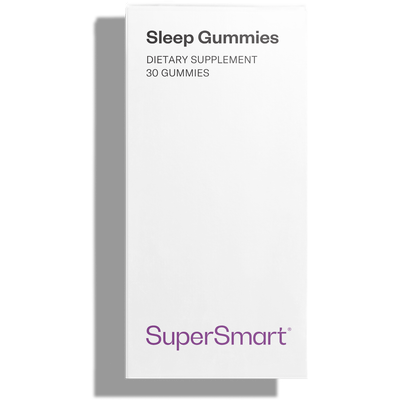
Take Advanced Sleep Formula, which combines melatonin and carefully selected plant active ingredients, or Sleep Gummies, which has a similar formulation but comes in the form of chewable gummies.
There are also melatonin-free sleep formulas:
Discover Natural Sleep Formula, a natural formula combining valerian, hops, Californian poppy, rhodiola and tryptophan.
Discover Deep Sleep Complex, a synergistic melatonin-free formula specially developed to promote continuous, restorative sleep.
SUPERSMART ADVICE
References
- Zawilska JB, Skene DJ, Arendt J. Physiology and pharmacology of melatonin in relation to biological rhythms. Pharmacol Rep. 2009 May-Jun;61(3):383-410. doi: 10.1016/s1734-1140(09)70081-7. PMID: 19605939.
- Besag FMC, Vasey MJ, Lao KSJ, Wong ICK. Adverse Events Associated with Melatonin for the Treatment of Primary or Secondary Sleep Disorders: A Systematic Review. CNS Drugs. 2019 Dec;33(12):1167-1186. doi: 10.1007/s40263-019-00680-w. PMID: 31722088.
- Tordjman S, Chokron S, Delorme R, Charrier A, Bellissant E, Jaafari N, Fougerou C. Melatonin: Pharmacology, Functions and Therapeutic Benefits. Curr Neuropharmacol. 2017 Apr;15(3):434-443. doi: 10.2174/1570159X14666161228122115. PMID: 28503116; PMCID: PMC5405617.
- Xie Z, Chen F, Li WA, Geng X, Li C, Meng X, Feng Y, Liu W, Yu F. A review of sleep disorders and melatonin. Neurol Res. 2017 Jun;39(6):559-565. doi: 10.1080/01616412.2017.1315864. Epub 2017 May 1. PMID: 28460563.
- Sharkey KM, Eastman CI. Melatonin phase shifts human circadian rhythms in a placebo-controlled simulated night-work study. Am J Physiol Regul Integr Comp Physiol. 2002 Feb;282(2):R454-63. doi: 10.1152/ajpregu.00135.2001. PMID: 11792655; PMCID: PMC3696986.
- Lemoine P, Nir T, Laudon M, Zisapel N. Prolonged-release melatonin improves sleep quality and morning alertness in insomnia patients aged 55 years and older and has no withdrawal effects. J Sleep Res. 2007 Dec;16(4):372-80. doi: 10.1111/j.1365-2869.2007.00613.x. PMID: 18036082.
- Cruz-Sanabria F, Bruno S, Crippa A, Frumento P, Scarselli M, Skene DJ, Faraguna U. Optimizing the Time and Dose of Melatonin as a Sleep-Promoting Drug: A Systematic Review of Randomized Controlled Trials and Dose-Response Meta-Analysis. J Pineal Res. 2024 Aug;76(5):e12985. doi: 10.1111/jpi.12985. PMID: 38888087.
- Lee MP, Kim DW, Fang Y, Kim R, Bohnert ASB, Sen S, Forger DB. The real-world association between digital markers of circadian disruption and mental health risks. NPJ Digit Med. 2024 Dec 5;7(1):355. doi: 10.1038/s41746-024-01348-6. PMID: 39639100; PMCID: PMC11621392.
- Chellappa SL, Morris CJ, Scheer FAJL. Circadian misalignment increases mood vulnerability in simulated shift work. Sci Rep. 2020 Oct 29;10(1):18614. doi: 10.1038/s41598-020-75245-9. PMID: 33122670; PMCID: PMC7596056.
- Hilli J, Korhonen T, Turpeinen M, Hokkanen J, Mattila S, Laine K. The effect of oral contraceptives on the pharmacokinetics of melatonin in healthy subjects with CYP1A2 g.-163C>A polymorphism. J Clin Pharmacol. 2008 Aug;48(8):986-94. doi: 10.1177/0091270008318669. Epub 2008 May 19. PMID: 18490497.





2 Days
Super fast delivery
Super fast delivery. Trying flexismart at the moment, Maybe a bit too soon to see results bit nice tolérance so far.
Maria Angeles Verdu
2 Days
Good service
Supersmart are an efficient company - the order arrived quickly. This is usual for them, though they have occasionally been let down by delivery firms - not a surprise and not their fault.
Barry Humphries
3 Days
Excellent product
Excellent product, quick delivery
FERENCNE Soros
5 Days
High quality, reliable service!
I have been ordering their products for years! They are excellent quality. And despite the international shipping, my order allways arrived pretty fast. The loyalty program is very fair, I get great prices on the products. Imagine: my specialists are asking me what have I been taking that my counts are so good!
Petra Hruskova
6 Days
I purchased Melatonin
I purchased Melatonin, very quick delivery to the UK and product is perfect. Very Happy
Dean Harriss
8 Days
Avis général
Well boxes are white but that puts a bit of serious color for my grey matter. Supersmart is quality products and made myself a pharmacy. Honestly should be remboursed by the health institutes selling pills
LEBORDAIS Thomas
9 Days
Arrives in just five days even to Japan…
Arrives in just five days even to Japan – that’s insanely fast! Amazing lineup of innovative products.
namio
12 Days
Quality and choice of supplements.
Quality and choice of supplements.
Maja
16 Days
perfect great
perfect great
igor janic
21 Days
Good products and speedy delivery
Good products and speedy delivery
Jim
25 Days
Very good
Very good, fast delivery
Paddy
25 Days
Excellent products
Excellent products. Excellent servce.
MIFSUD Joseph
25 Days
It was sent expediently
It was sent expediently, the tracking worked nicely!
Roger De Backer
27 Days
Everything okay
Quality products people can account on. Fast shipping.
Fred Laan
38 Days
Good products
Good products
Emmanuel
of experience
your money back
##montant## purchase