
The cutting diet for women: lose fat without losing energy
We often hear the term ‘fat loss’ used in the sports and wellness sectors. This approach has a targeted objective: to reduce body fat (not muscle mass).


What is the cutting diet, and how can it be adapted for women?
Definition of the cutting diet and key points
The cutting diet aims to reduce body fat while maintaining muscle tone.
The aim is then to be able to shape the figure better, to show off the muscular work done and to regain a feeling of lightness without losing energy.
Unlike a classic slimming diet, which is based on significant calorie restriction, the cutting diet is based on a fine-tuning of nutritional intake: more proteins, fewer carbohydrates and carefully chosen fats (we'll go into more detail below).
So it's not a question of following a restrictive diet, but of intelligently adapting your diet to encourage gradual fat loss that respects your body.
Why adapt the cutting diet for women?
For women, this approach needs to take account of specific hormonal and metabolic factors.
The menstrual cycle, for example, influences fat storage, appetite, recovery and even mood:
- the luteal phase (after ovulation) is often associated with increased appetite and temporary water retention, which can distort weight readings
- the follicular phase (before ovulation), on the other hand, is generally more favourable to performance and carbohydrate management
Adopting a diet that is too strict or ill-adapted could unbalance the hormonal system, disrupt the thyroid or lead to fatigue.
If energy availability is too low (RED-S), it can even lead to the cessation of menstruation, a drop in performance, a feeling of cold or repeated injuries—all warning signs that should not be ignored.
The challenge for women is to find the right balance: slimming down without compromising energy, hormones or morale.
Foods to prioritise and avoid in a women's cutting diet
Foods to prioritise
Your aim is to lose fat, not muscle.
To achieve this, certain foods are recommended.
You should favour:
- lean protein sources (chicken, turkey, fish, eggs, legumes), which help to preserve muscle mass. For protein intake, women on a diet are generally advised to aim for 1.6 to 2.2 g/kg of body weight per day
- fibre from green vegetables, low-glycaemic-index fruit and wholegrain cereals, which contribute to satiety and healthy digestion. For carbohydrate intake, women on a diet are generally advised to aim for 3 to 5 g/kg per day
- good fats (olive oil, avocado, oilseeds), which are essential for maintaining hormonal balance and overall health. For fat intake, women on a diet are generally advised to aim for 0.6 to 1.0 g/kg per day (taking care not to go below 20% of total daily calories)
Foods to avoid
Conversely, it is advisable to limit:
- foods rich in fast sugars (pastries, fizzy drinks, processed juices), which can upset blood sugar levels and compromise your weight-loss goals
- ultra-processed foods, rich in additives and unhealthy saturated fats, which can have a negative impact on the metabolism and lead to inflammation
- excess salt, to reduce water retention
Example of a cutting diet menu for women to try for 1 month
The aim of a cutting diet for women is to intelligently distribute macronutrients (proteins, carbohydrates, fats) over the day, taking into account the pace of life, level of physical activity and specific needs of each woman.
Here's a suggested menu for a day, to be modified each day to maintain sufficient variation in foods:
Breakfast:
- 2 scrambled whole eggs (about 100 g)
- 50 g fresh or frozen spinach
- 1 slice of wholemeal bread (about 40 g)
- 1 piece of fresh fruit (for example, 1 kiwi or 1 small apple, 100 to 120 g)
Lunch:
- 120 to 130 g grilled chicken fillet
- 80 g cooked quinoa
- 150 g green vegetables (broccoli, green beans, courgettes, etc.)
- 1 tablespoon olive oil (10 g) for seasoning or cooking
Dinner:
- 120 g baked salmon
- 150 g roasted courgettes
- 1 handful of rocket (about 30 g)
- 10-15 g walnuts (4–5 pieces)
Snacks (optional as required):
- option 1: 1 plain yoghurt (100 to 125 g) + 10 g almonds
- option 2: 1 medium apple (150 g) + 1 teaspoon of natural peanut butter (about 10 g)
When dieting, cravings can sometimes get the better of you. To avoid these, remember to boost your protein intake, particularly with satiating sources such as casein.
For women, a cutting diet generally lasts 4 to 12 weeks, with a target weight loss of 0.5 to 1% per week.
It's essential to combine this with regular physical activity: losing fat while gaining muscle is all about sport.
What food supplements should I use to help me lose weight?
During a cutting diet, the body undergoes a calorie deficit, which can make it difficult to maintain muscle mass (1), energy management and nutritional balance.
Appropriate supplementation can help to support these different aspects and prevent the risk of deficiencies.
Protein is a central nutrient during a cutting diet.
By reducing calories, it is essential to continue to provide sufficient protein to preserve muscle mass and support recovery.
Whey, in both native and isolate form, is a recommended source because it is rich in essential amino acids, particularly leucine, a crucial amino acid in muscle building (2).
 Discover Native Whey Protein Isolate, guaranteed free from flavouring, colouring, sugar and added sweeteners.
Losing body fat is the main objective of a cutting diet.
Certain natural ingredients contained in so-called ‘fat burner' supplements are traditionally used as part of programmes to support the metabolism.
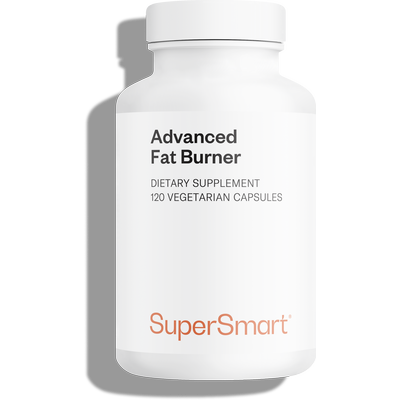
Discover the Advanced Fat Burner supplement, formulated with plant extracts studied for their potential capacity to eliminate stored fat.
Finally, a prolonged calorie deficit can lead to deficiencies in the vitamins and minerals essential for maintaining energy, hormones and the nervous system.
A complete multivitamin formula can help to cover daily micronutrient requirements, particularly during periods of calorie restriction.
Discover the Daily 3® supplement, rich in exceptional vitamins, minerals and phytonutrients.
SUPERSMART ADVICE
References
- Stefanakis K, Kokkorakis M, Mantzoros CS. The impact of weight loss on fat-free mass, muscle, bone and hematopoiesis health: Implications for emerging pharmacotherapies aiming at fat reduction and lean mass preservation. Metabolism. 2024 Dec;161:156057. doi: 10.1016/j.metabol.2024.156057. Epub 2024 Oct 30. PMID: 39481534.
- Devries MC, Phillips SM. Supplemental protein in support of muscle mass and health: advantage whey. J Food Sci. 2015 Mar;80 Suppl 1:A8-A15. doi: 10.1111/1750-3841.12802. PMID: 25757896.
Keywords



4 Days
Super fast delivery
Super fast delivery. Trying flexismart at the moment, Maybe a bit too soon to see results bit nice tolérance so far.
Maria Angeles Verdu
4 Days
Good service
Supersmart are an efficient company - the order arrived quickly. This is usual for them, though they have occasionally been let down by delivery firms - not a surprise and not their fault.
Barry Humphries
6 Days
Excellent product
Excellent product, quick delivery
FERENCNE Soros
8 Days
High quality, reliable service!
I have been ordering their products for years! They are excellent quality. And despite the international shipping, my order allways arrived pretty fast. The loyalty program is very fair, I get great prices on the products. Imagine: my specialists are asking me what have I been taking that my counts are so good!
Petra Hruskova
9 Days
I purchased Melatonin
I purchased Melatonin, very quick delivery to the UK and product is perfect. Very Happy
Dean Harriss
11 Days
Avis général
Well boxes are white but that puts a bit of serious color for my grey matter. Supersmart is quality products and made myself a pharmacy. Honestly should be remboursed by the health institutes selling pills
LEBORDAIS Thomas
12 Days
Arrives in just five days even to Japan…
Arrives in just five days even to Japan – that’s insanely fast! Amazing lineup of innovative products.
namio
14 Days
Quality and choice of supplements.
Quality and choice of supplements.
Maja
19 Days
perfect great
perfect great
igor janic
24 Days
Good products and speedy delivery
Good products and speedy delivery
Jim
28 Days
Very good
Very good, fast delivery
Paddy
28 Days
Excellent products
Excellent products. Excellent servce.
MIFSUD Joseph
28 Days
It was sent expediently
It was sent expediently, the tracking worked nicely!
Roger De Backer
30 Days
Everything okay
Quality products people can account on. Fast shipping.
Fred Laan
41 Days
Good products
Good products
Emmanuel
of experience
your money back
##montant## purchase